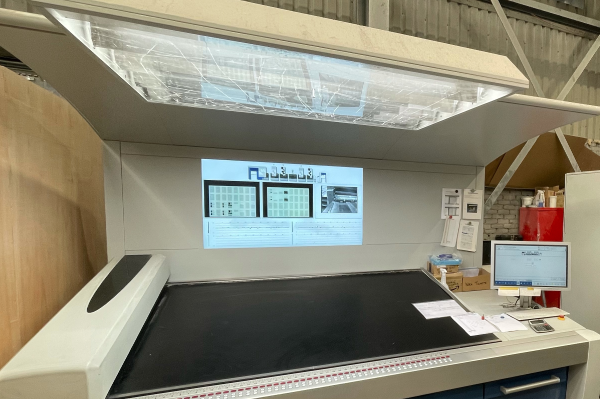
Printers have less than two years to switch fluorescent lamps used for controlled lighting in viewing booths and at the end of presses. And less than six months to convert factory and office lighting away from traditional fluorescent tubes to LED or other forms of lighting.
This is because the use of mercury is being phased out under international agreements with general purpose lighting being the first area to under go the great switch off in August. From that point it will no longer be possible to buy new lamps nor the fittings to accommodate them. It will continue to be legal to use the lamps until stocks run out, but these are not expected to be deep as production of the tubes is being closed down.
Mercury is recognised as a poison and under the Minamarta Convention, 131 countries have agreed to eliminate its use and production.
This has already caused a storm when regulations called for replacement of mercury vapour lamps for UV curing, earning that technology a stay of execution. The issue will be reconsidered in 2027, at which point LED technology may have reached the point where it can replace UV lamps for curing varnishes as well as inks. If not, a further exemption may be agreed.
Likewise it is possible that an extension on replacing mercury vapour lamps for controlled lighting conditions may be agreed before the ban takes effect in February 2025, but this is unlikely. Just, VeriVide and GTI as the main providers of viewing booths and end of press luminaries, can deliver LED based alternatives which offer greater control over different lighting conditions and do not face the same risk of falling out of spec as conventional lamps.
However, the possibility is that specialist lamps may be phased out faster as manufacturers no longer making standard fluorescent tubes may feel unable to justify continuing production to meet a limited demand for highly specialist lamps.
The use of conventional UV lamps has all but been eliminated in large format inkjet printing and increasingly too in narrow web printing for labels, either flexo or inkjet printed. It remains the standard however for carton printing where the investment cycle is longer and there is a need to cure varnishes which require shorter wave lengths than LED has been able to achieve, at least at a sensible cost and with the required durability.
The full report appears in the new edition of Print Business magazine.