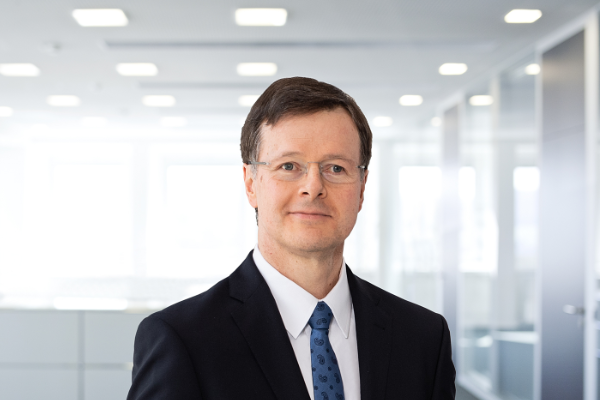
Heidelberg has named a successor to Rainer Hundsdörfer as CEO. He is Dr Ludwin Monz who, until resigning in September, was CEO of Zeiss Meditec.
Hundsdörfer remains in post until the end of the current financial year, with Monz taking over as CEO on 1 April. The outgoing CEO will have been in place for more than five years, having replaced his predecessor Gerold Linzbach several months before the end of his term. Hundsdörfer will, it seems, reach the end of his contract by which time he will be close to 66 years old.
When Hundsdörfer arrived he pledged to take the company from sales of €2.5 billion to €3.0 billion in his five-year tenure. And to boost the share price from €2.34. On Friday Heidelberg’s shares were €2.23.
Instead of expanding sales, led by expansion of digital printing, sometimes harsh external forces have forced Heidelberg to trim costs and reduce its outgoings. Major projects like the VLF presses and Primefire 106 inkjet press were cancelled and property such as the Wiesloch factory site and offices in the UK was sold off. However, Hundsdörfer leaves Heidelberg virtually debt free having discovered enough cash in a supplementary pension fund to refinance the company.
Under his tenure, Heidelberg also tried to sell Gallus to what was an entirely unsuitable purchaser, forcing Heidelberg to bring the narrow web press provider back into the corporate fold. There is no need to spin off Gallus, he has explained. Instead Gallus will gain more independence and has plans to expand the Labelfire inkjet press range into entry level, as well as fully loaded hybrid models, and to offer wider widths.
Targets for subscription sales have fallen short of hopes, but the groundwork has been laid for Monz.
The new CEO has no experience of the printing industry and has worked for Zeiss for most of his career. He became CEO of Zeiss Meditec in 2010 and has led sales growth to €1.2 billion.
More importantly for Heidelberg’s supervisory board, Monz has successfully delivered a recurring revenue model for the eye surgery equipment the business sells. It has also developed and implemented the Zeiss Medical Ecosystem around equipment, medical staff and patients.
“For me, Heidelberg is a flagship of German mechanical engineering. I see enormous potential for the future in the broad expertise of its employees, its widely branched global organisation, and its long established brand,” he says in the announcement.
In the same announcement, Hundsdörfer says: “These have been very challenging years here at Heidelberg. We successfully defied the pandemic and strategically realigned Heidelberg through our successful transformation. I am proud to be part of the Heidelberg family. I wish my successor Ludwin Monz a good start to the new financial year and continued success.”
Dr Martin Sonnenschein, chairman of the supervisory board, has endorsed this view. In the company’s annual report, he says: “Thanks to the success of its transformation programme and the focus on growth areas . . . Heidelberg is now in position to generate value.”
The cost saving measures have reduced the break even point for Heidelberg to €1.9 billion in sales. Hundsdörfer has also expanded into production of electrical charging Wallboxes, increasing production to 1,000 units a year. Each has a retail value of around £500.