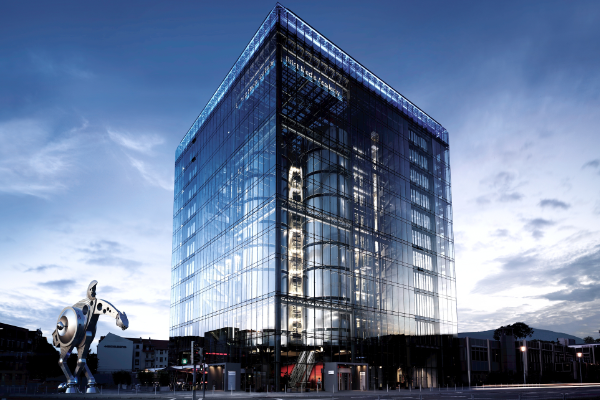
Heidelberg has pocketed another cheque after selling the landmark Print Media Academy in the centre of Heidelberg for a double-digital million euro sum.
The deal, however, severs a last contact with the centre of its home city, having previously sold its head office building and research and development building. The buyer is a Luxembourg based investment company which will rent some office space in the building to the former owner.
It follows hard on the heels of the sale of space at the Wiesloch factory site to a Belgian company experienced in developing commercial parks with 30 owned across Europe. There is more excess space at the factory to be hived off before the transformations are finished.
If completion of the property deal was cause for celebration, the eleventh hour collapse of its €120 million deal to sell Gallus to an almost unknown company Benpac has meant sliding down the snake with decisions necessary about the future of the label and packaging press business.
The Print Media Academy is the tallest building in Heidelberg and is adorned with a three-legged horse sculpture. When first opened there was some consternation among staff at the introduction of open plan offices and work spaces for Germans used to working in their own or small shared offices. A presentation theatre at the base of the building is representative of a drop of printing ink on a plate. It is unlikely that this will survive in plans for a “new forward looking use of the building”.
In those early days Heidelberg owned the Michelin starred restaurant on the top floor and the ground floor bar, both since sold and open to Heidelberg’s citizens. As well as offices, the PMA hosted presentations, training, press conferences and wider events since opening in 2000.
Construction was part of a wider project that included a block for research and development and should have included a new showroom for all Heidelberg’s presses, including web offset machines before this was sold off.
Most PMA based staff have moved to Wiesloch uniting different parts of the company in close proximity, helping define Heidelberg as “an agile modern company”.
CEO Rainer Hundsdörfer comments: “For us, the sale of PMA is the next logical step on our agenda. We are aware that the sale has a signal effect: However, we will remain closely connected to the city as well as the region in the future. At the same time, we are convinced that the change of ownership will open up new, diverse perspectives for the city and the local people.”
The proceeds from the sale will strengthen liquidity, strengthen financial stability in the face of the ongoing pandemic. The proceeds from the sale of Gallus will not be part of this as the sale collapsed, after the buyer did not make the purchase price. Heidelberg says it will assert its rights, though any compensation would be a long time coming.
Heidelberg has been quick to reassure Gallus customers that nothing will change and the five sites and 430 employees will remain on Heidelberg’s payroll. It is examining a number of options for the longer term future of Gallus, including action to boost operating performance. “Gallus made good operational progress last year under the Heidelberg umbrella”, the company says.
While the labels and flexible packaging market that Gallus serves, it is no longer markedly different to its competition, and the costs of manufacture in Switzerland are an increasing burden.