“We had our best ever months in September, October and November,” says Ed Oakes, managing director of Spingold. “And we have taken on three additional staff, who had lost their jobs, and we are currently recruiting for someone to look after our social media and website.”
The company might have foreseen this. The company prints playing cards, game cards and tarot cards used for fortune telling. And during the Covid pandemic these have been in great demand, selling in vast quantities over the internet. “And we have a couple of customers who are selling games and quiz cards through Amazon,” says Oakes.
“At the start of the lockdown cards represented 30% of our turnover. Now it is 80-90% with growth from different customers and different types of cards. For example, we have printed a lot of cards that are associated with people’s mental health for a charity organisation at close to cost price.”
Now as the demand for cards shows no sign of abating, it has invested in a second Duplo PFI DiCut 300 rotary die cutter to cope with demand for different styles of cards and a Moll Compact small format folder gluer to produce the cartons to pack the cards.
The journey into playing cards began nine years ago when Oakes realised that his hobby could become a revenue stream for the small team at Spingold. The keen poker player set about investigating what is needed to print cards for bridge or poker as well as tarot decks, games and cards used in the educational sector.
“I had been playing poker for 20 years,” he says, “so I have always had an interest in cards and thought that it can’t be too difficult.” He was wrong. There was equipment to research, the materials and coatings to understand. It took the company almost three years to get to grips with this. The material for the cards for example comes from a mill in Germany and the small business had to commit to an order for several tonnes before getting supply. Having come so far the company held its breath and took the plunge.
Cards divide into those requiring the linen material to provide a surface that does not slip through the card player’s fingers. At the same time a plasticised slip coating is needed so that the cards can be dealt without sticking to each other. Other styles of cards by contrast need a smooth surface. “The playing card is quite a niche product that only two or three printers in the UK can produce,” Oakes says. And Spingold is not in the mass market, once dominated by the likes of Waddingtons, nor in supplying the casino market.
Instead the company focuses on short runs of bespoke designs for clubs, for promotional use, personalised cards and sets for testing new games. Each set can be personalised on the back or on the front and back, prompting the launch of a Business to Consumer website during the year built using Printbox software.
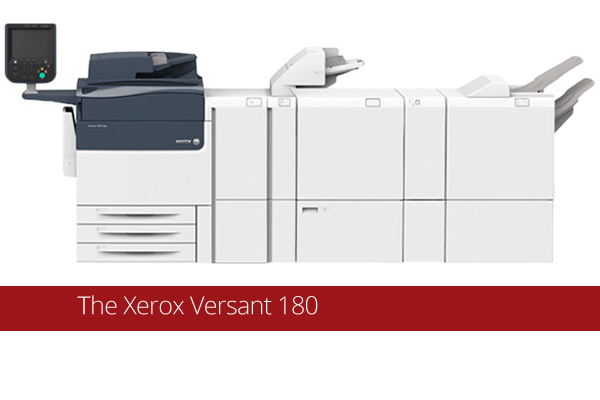
Oakes came across the Polish software company at a DScoop meeting in Austria. Spingold is not an HP Indigo customer, running instead a brace of Xerox Versant 180s and a Ricoh Pro C7100. “The Indigo is an amazing piece of kit, but I could not justify it for what we do. [HP’s] Peter Jolly had invited us because he had sold us a lot of kit when working for Duplo.”
This included booklet makers, a DC745 multi finisher and the first PFI DiCut 300 in 2016. When this year the company needed the additional capacity, a second of the rotary die cutters was the obvious choice. “In April we lost 25% of our work overnight. By August we had recovered before the three best months we had ever had and then it becomes crazy for the end of the year,” he says. “We have around £10,000 for dies that run on either machine, which we would have had to duplicate had we chosen another supplier.”
The volume of work coming through the PrintFromYourSofa.co.uk website, which allows individuals to create highly personalised cards using uploaded photos, has doubled, albeit from a small start. That is the future, says Oakes. If work for brochures, events and exhibitions returns it will be welcome but it is no longer needed. “We have been lucky, we have worked smarter, moving away from simple ink on paper. Cards are more than just playing cards. We can do everything from start to finish under one roof.”
This starts with creating an imposition using the Fiery Rip, though to the die cutter, delivering an assembled deck for the box cut, folded and glued on the Moll. Handling is minimised. With the use of web to print that side too is automated.
This means that a small business near Colchester has a strong hand to play thanks to what has proved an ace decision.