
Xaar has come out fighting, a year after canning development of its thin film high resolution printhead.
It has announced ImagineX as a new head platform that offers benefits that CEO John Mills says are indistinguishable from the thin film project, but which build on Xaar’s deep expertise with high viscosity piezo inkjet.
The ImagineX platform is still about bulk inkjet heads for industrial applications, now including silicon nozzle plates for resilience, an increased resolution of up to 1440dpi, a speed increase and the ability to fire aqueous inks. This will allow Xaar to address applications in packaging, textiles, commercial print, display graphics, as well as its core ceramics base.
The first product in the new portfolio is the 2002 head, introduced in August. Others will follow over the next 18 months to two years.
The effect is to catapult Xaar to the forefront of inkjet head development in terms of head specifications and applications. The company has found a way around the key issue of its shared sidewall flexing technology which meant that only one in three nozzles might be fired at any one time. Now all nozzles can fire simultaneously lifting the firing rate to a maximum 150kHz.
There is a strong roadmap for the future of the ImagineX programme, says Mills, resulting in 30 new customers in the year since he took over. It was a question of uncovering technology and development projects that had been overshadowed in pursuit of the thin film technology. Some of the IP generated on the project has been transferred to the new platform.
“It retains all the benefits of the through flow technology, which means we can print very difficult materials with high viscosity inks at high resolution. And as a result we have regained market share in areas where we have been in decline.”
The head will accept higher pigment loadings with fewer humectants needed that some other heads. This will help OEM customers achieve greater throughput at higher speeds. Mills says: “You get more colour down on a substrate if you can use inks with a higher pigment loading.”
The announcement of the new approach coincided with the release of six-monthly results, showing that sales have held up well. Revenue was £23.7 million (£25.5 million) and gross profit rising to £8.4 million (£7.0 million). On a continuing operations basis, the pretax loss was reduced to £1.1 million (£2.9 million).
The company says: “The change in go to market has helped recover some of the losses seen in the second half of 2019. More significantly, the change in strategy has started to lay the foundations for long term growth with an increased number of OEMs developing machines with our printheads and higher levels of engagement with both OEMs and end users who are developing their own print solutions.”
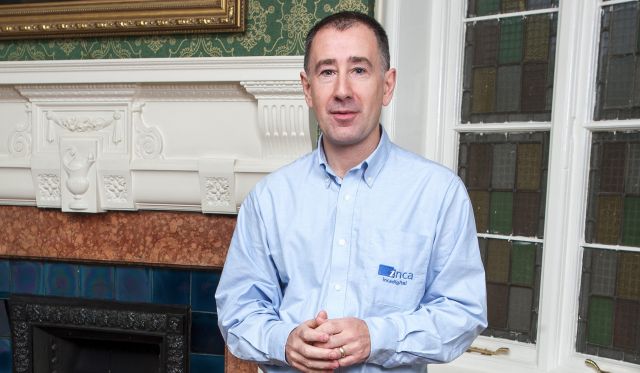
John Mills has been quick to take action since becoming CEO at Xaar. There is a new inkjet head strategy built on the bulk piezo printhead technology to deliver the attributes of the aborted thin film project.