
Poplar Services Printers in St Helens has been around since 1982 and today operates a purely digital set up from a 1,800m2 factory. When the business started back in 1986, litho was the name of the game and Poplar built a bank of Heidelbergs.
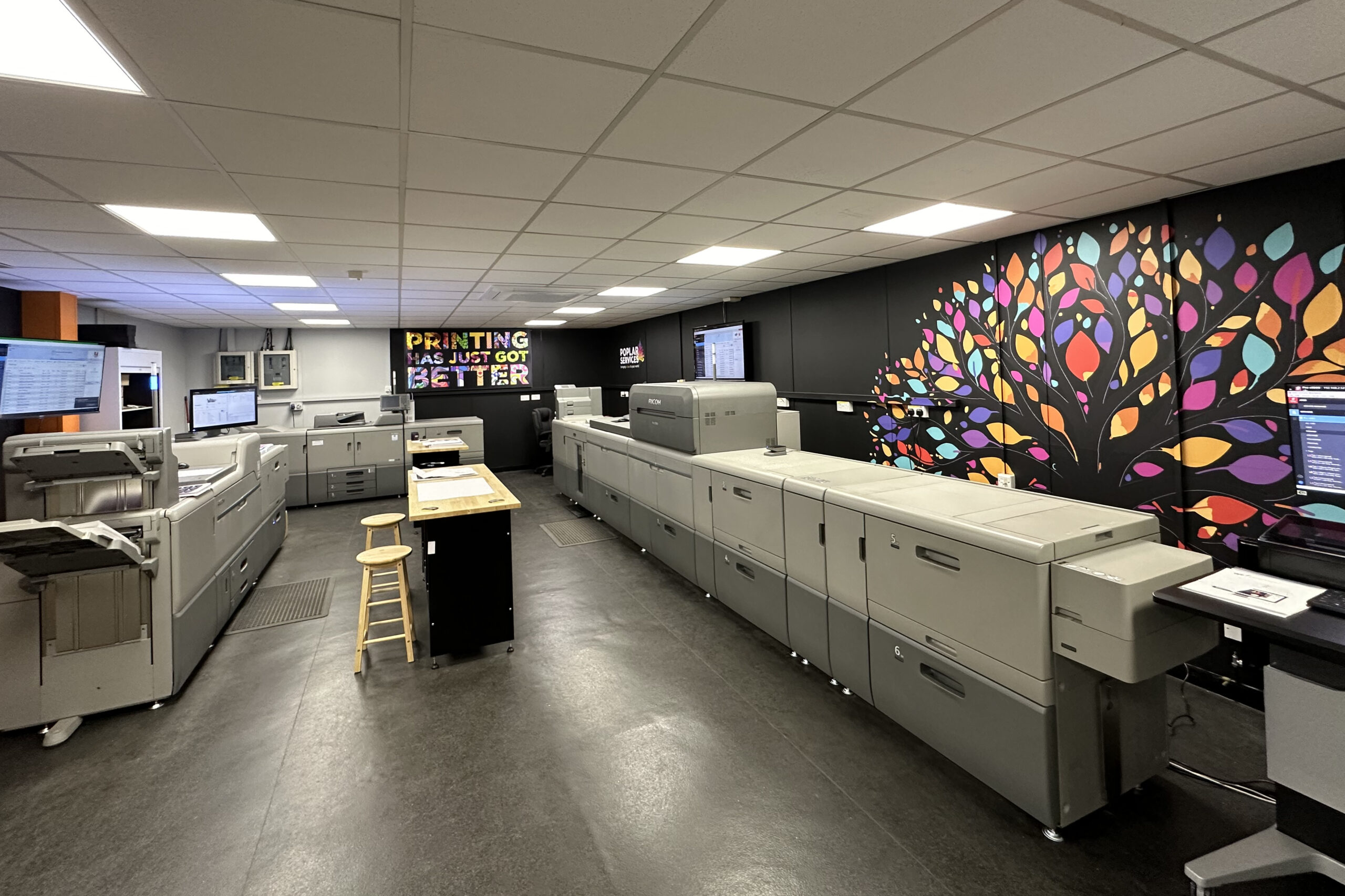
That has all gone as shorter runs make litho increasingly unappealing. Instead the business has invested in Ricoh and will be the first printer in the UK with both a Pro C9500 and Pro C7500. It already has an 8210 mono press from Ricoh so understands the support and back up it can expect.
“At one time we were all litho,” says managing director Martin Winders. “Now we are wholly digital and we don’t manufacture litho ourselves, sending any litho work to the trade while we specialise on the digital market.”
Its last litho press was an ageing Speedmaster 74 which was proving expensive to keep in fine fettle and with the growth in short runs, digital presses are much better says Winders. “There is still a very good market for litho. However, for us we think that digital is our way forward.”
The decision to install both new machines is part of the strategy. The faster C9500 will handle its bread and butter four-colour work; the C7500 comes able to print an additional seven toners, that is white and clear as well as metallic and neon colours, amounting to 11 in all. “It means we can go to our client base to talk about the extra effects and the impact we can make.
“We have had the C9110, so the C9500 is a direct replacement while the C7500 is in a completely new space. We saw the machines at Ricoh’s customer experience centre in Telford where we were very impressed. We have a long standing relationship with Ricoh so we know the presses deliver consistent colour and print quality. And we know the people. It’s like a family business; they care about and getting the job for the customers.”
Almost all the customers are from the B2B world, mostly small companies interspersed with a couple of customers who operate nationwide. The quality of the digital presses means that there is no real difference in the work that a large business can churn out and the work that the eight-strong Poplar prints.
“People only want short runs now which means that with the new presses we are up there with the very best because we have the same equipment,” he says.
On top of this is trade work and work for print management. It has won back substantial volumes of work for a local authority which was lost to a company in Poland, which promised a next day service. That has proved difficult to maintain, giving Poplar the opportunity to regain work. An online portal makes it easier to order standard print items, business cards for example.
This was introduced for that national customer who has 600 outlets across the country. “We built the portal for them so they can deal with us direct rather than faceless communication. We are now integrated into their business and that means something. Gareth here looks at all the artwork and will pick up any issue and can make the changes.
“Our strategy is to distinguish ourselves by quality and by service. It is not stack it high and sell it cheap.”
Alongside the presses Poplar is buying a ColorCut digital cutting unit from Morgana. “We would like to be able to produce bespoke folders. Then there’s door hangers for hotels and small format packaging. This could be for prototypes or small samples that sales reps can use to introduce a new product. That is potentially a very big market,” says Winders.
Likewise he believes that the extra colour capability of the Pro C7500 will mean the company can offer more to a customer and that this will be welcome. “We can show them what is possible with print, the different effects that they can get.”
The company, like pretty much all others, suffered during the Covid period. “That was tough,” says Winders. “But we managed to come through without making redundancies and now everyone is back better than before. We are a success story out of Covid!”
It does not mean that nothing has changed. During that time the company looked at what it was doing and what it might be able to do, what it was buying that it could do itself. That led to investment in dye sublimation for printing on mugs, bottles and other promotional items. In turn this led on to the latest round of investment for the small business.
“We now have top end digital colour with the ability to deliver special colours and in addition we can do all the speciality cutting for folders and so on with no minimum order quantity. It is good for the customers, good for the environment and good for us. Everybody benefits from that. That’s the digital revolution!”

MORE FROM THE MAGAZINE
EXPLORE MORE ON POPLAR’S EQUIPMENT