It is some years ago. At a paper merchant’s head office in the Midlands. The presentation is to two distinct groups of customers. One group are traditional commercial printers, the others are in the display print business, evolving from screen print and litho lamination into large format inkjet.
The presentation is about the possibilities opened up by the new inkjet technology. Commercial printers are used to handling digital files, display printers have the connections and know the business as it were. They are vehemently opposed to any incursion from commercial printers and have strong arguments: commercial printers always sell on price and destroy the market; they do not understand how to add grommets or install graphic displays; they do not have the knowledge or experience in the market and so will let customers down. The message to the host was that the graphic display sector needed to keep commercial printers out and the merchants should not encourage them.
History shows it did not work out like this. Instead the arrival of inkjet printing has led to an explosion of creativity in the display graphics sector which continues. Consequently the sector is far larger now than it once was. The paper merchant supplies truckloads of material rolls and now all manner of rigid substrates.
History is now repeating itself. Commercial printers are eyeing the possibilities in packaging. For the most part this is carton printing, but some look at labels, fewer at flexible packaging and almost none at corrugated.
There is a growth in demand for cartons that does not exist across the commercial printing landscape.
Depending on which forecast you believe, growth to 2033 could be 6-14% , driven by a number of concurrent factors. Smithers reckons that growth worldwide will be 3.5%, though the bulk will come from emerging economies. Others expect demand for packaging to grow at twice the rate of demand for commercial print. Another Smithers report predicts that the value of digital print by 2035 will be 50% higher than 2025 levels and that the volume of print and packaging will be 54% higher in that time. This is thanks mainly to growth in corrugated, cartons and flexible packaging it says. A number of factors are at play.
First is the growth of packaging as a form in itself. This is a consequence of the Apple effect, where the computer company paid incredible attention to the customer experience and the quality of its packaging, from the look, the precision of the structure, including the slight resistance when the lid is lifted for the first time. The packaging is an experience in itself.
A second factor has been the reshoring trend where companies are bringing back manufacture from the Far East and packaging along with it. It began with Covid and kicked up with the Ukraine and now Iran wars. There is greater security and less money tied up in stock and less risk of disruption to the supply chain when production is local.
And a third trend which may also be ticked up by any impact that the Iran war has on plastic production, is the migration from plastics to more easily recyclable fibre based equivalents. The inherent sustainability of cardboard makes it attractive. One of the world’s largest packaging groups Smurfit Westrock says that “64% of consumers are more likely to buy from retailers with sustainable packaging solutions”.
Unsurprisingly the established carton converters would like to reap this harvest themselves, so do not welcome intrusions from commercial printers.
The push back is expected as are the protectionist arguments. The market will be destroyed by companies that know only how to sell on price; they will fall down on service; they do not understand the intricacies of carton boards, of varnishes, of the crucial importance of colour consistency.
As before this is a Canute-like wish. Carton printing is within reach of commercial printers. Commercial printers understand digital printing which for the most part carton printers have shunned. Commercial printers have through necessity learned agility which can be applied to carton printing.
Jon Clark, president of BPIF Cartons, says: “The carton sector has been slow in terms of digital take up and over the last five to ten years, there has been nothing new that’s going to change the scenario.
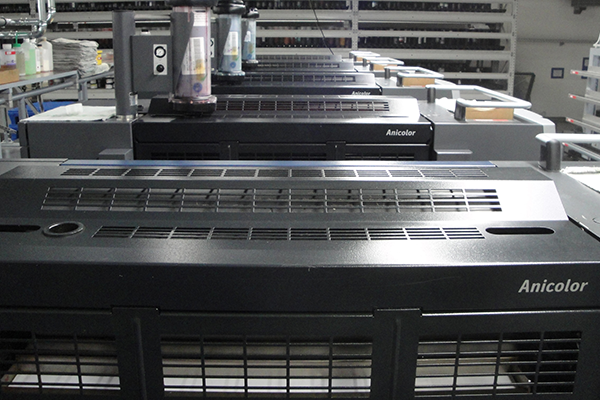
“The problem is a combination of limited sheet size with digital printing and the advances that traditional analogue machines have seen. They have done a bloody good job and there’s been a huge increase in productivity. These presses can offer the finishes that are needed and if companies want short runs, there are machines like Heidelberg’s Anicolor to print conventionally rather than digitally. The number of converters that are our members with digital machines is very small.”
However, while straightforward cartons are within relatively easy reach, commercial printers are not going to be producing cartons for pharmaceutical companies because the challenge is not about the printing and the risk to the customer is too great. Children’s toys are out because further certification will be needed to ensure that every element of production complies with safety legislation. And the same applies to much food packaging where compliance and auditing are essential features.
Nor can newcomers expect to win contracts as a primary level supplier to major brands requiring hundreds of thousands of units a month under strict SLAs. But there are thousands of customers that fall outside these parameters, from the kitchen table producer of creams or candles to artisan companies wanting presentation packaging for a limited edition gin or vodka, to small time producers of clothing, neutracianal supplements or vapes. These are products where the order volumes and frequency is generally too low and too infrequent to interest the major converters.
While the numbers needed for vapes may be large enough, the mix of flavours can makes this a logistical nightmare to plan and print, while the use of lighter weight board opens potential for digital printing, or at least printing on a B2 sheetfed press. There seems to be none of the issues around taint that make printing cigarette packaging such a specialised skill such as sheer volumes, intricate foiling and avoidance of taint or left over odour from the printing process.
Ultragraph, a commercial printer in Ormskirk, started to produce vape boxes as its introduction to carton printing when it had a long perfecting B2 Speedmaster. It acquired a Duran carton gluer and then in 2022, bought what was then the first Speedmaster CX104 in the UK. Now it is more of a carton printer that produces commercial work than a commercial printer with some carton work. Its customer roster includes food and drink companies, cosmetic, retail, automative, pharmaceutical and vapes.
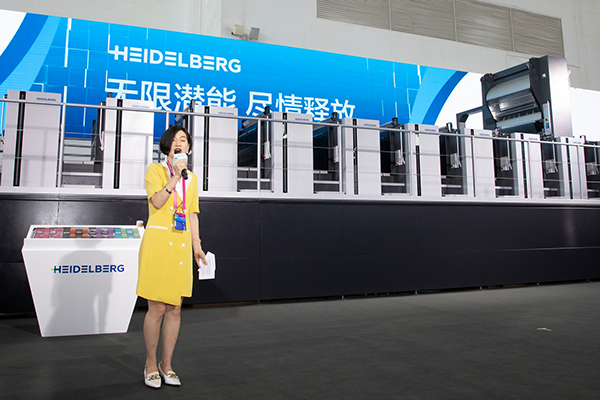
It is far from alone in taking this path, Heidelberg UK sales manager Phil Butress mentions Print Library in Northern Ireland. It had invested in an EasyMatrix platen, carton glueing line and CAD design software before moving from a B2 press to a five-colour plus coater Speedmaster CX104, the company citing growing demand from the FMCG sector where it works for “brands that value quality, reliability and fast turnaround”.
Butress cautions that a different knowledge set is required for cartons even if suitable equipment is available. “Quite a few people have climbed the barrier,” he says. “Printers need to understand the importance of brand colours and be capable of washing up between special colours with minimal disruption. You have to remember that packaging often needs five or six colours.”
The kitchen table start ups are especially interesting for commercial printers. These businesses do not want to tie up cash in stocks of printed cartons that may not be used for months. In the FMCG world, major food companies will order a year’s worth of cartons in one hit in order to shave fractions off the price of each carton. This adds up to significant savings over millions of units and has been an impediment to the take up of digitally printed cartons which must be more expensive per unit to produce despite anyone and everyone pointing out the costs and risks involved in warehousing. Small and micro businesses do not have this focus on unit cost. They want to get their product to the customer, frequently through an online store of some kind or via a local farmer’s market or craft fair.
The London Luxury Candle Supply company is a prime example. It supplies glassware, wax and fragrances to artisan candle makers. It had imported these from China along with plain boxes to ship to customers to package their finished products. The boxes were not always the ideal size for what its customers were selling. LLCS needed to improve this aspect of its offering to those customers that sell premium products via high end retailers as well as through the internet, because these candlemakers wanted to buy packaging through its materials supplier. They do not want to deal with multiple suppliers and invoices.
This led to a need to produce a small number of bespoke sized cartons at any one time and in turn to investment is the Fujifilm Revoria supplied through Jet Tech Technologies solved the problem. Being able to supply a small number of cartons to its customers (minimum order quantity is 30 units) with a stand out design has become a USP for the business compared to its rival suppliers.
The cartons can be printed with white as well as in colour and foiled with a Vivid Matrix unit for a further touch of luxury. The business can also print directly to the 30cl jars the candles sit in thanks to a UV inkjet printer.
The investment in print has moved it from being a straightforward provider of oils, fragrances and waxes into a full service business. Jet Tech provided assistance and advice on the choice of materials to be used.
Managing director Steve Andrew says: “The Revoria can print on 600 micron boards and as well as candles we have provided machines to ‘a high profile’ jeweller to create its own short run packaging.”
Printing such packaging is relatively straightforward and within the compass of many machines, digital presses included, purchased for commercial printing. In some instances a thick stock kit may be needed to handle the heavier boards that carton printing needs but in many cases this is a field upgrade. There are extremes: Ricoh can handle 800 micron board using a Media Max upgrade. This is pitched at companies wanting to switch from plastic to board for membership, gift or loyalty cards which because the print is digital can be personalised in the same step as printing.
The same press can also print the point of sale merchandise for presentation of the gift cards and can print folding cartons on 600gsm substrates. This extreme is not necessary particularly for smaller cartons that the B3 press must produce.
The half sheet or B2 format is where most of the action is. It is the most popular format for commercial printing in the UK and is the target for the wave of sheetfed inkjet presses that are starting to arrive or are about to do so.
HP Indigo developed a version of its B2 press design specifically for cartons, but this has never been as popular as its machines for flexible packaging print that were introduced at around the same time. Instead, printers have been happy to work with versions of the standard B2 Indigo family adapted to handle thicker materials. Delga, part of the Meliora group, uses its B2 Indigo 15K for a wide variety of cartons, from vapes to dog treats with different flavours requiring the same packaging format, but with different artwork and wordings.
Indigo users have access too to the likes of Collage and Mosaic to make every pack different by using an algorithm to shift some element of design using the same artwork within a set of rules. To date this has been more popular in labels and flexible packaging than in cartons, but it is possible.
Delga is interesting too in having made finishing digital through a Highcon to cut out and crease cartons, potentially with everyone different or at least in very small batches. The Highcon was initially aimed at carton printing, but like digital printing carton converters have been reluctant to invest in new ways of working, or to compromise on quality. Instead Highcon is being put to better use on corrugated boards, either for packaging or display print.
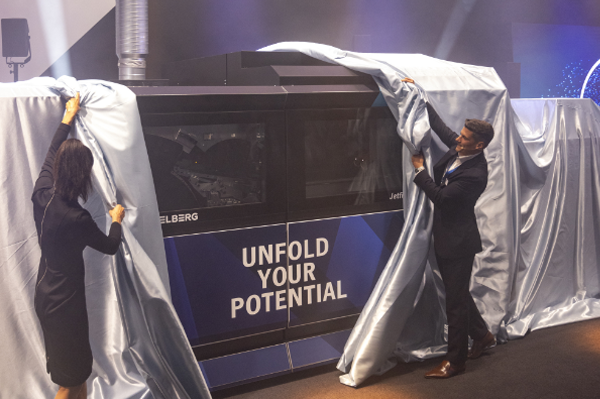
Joining the B2 Indigos, the UV cured inkjet presses from Komori and Konica Minolta are emphasising the ability to print carton materials as is the Canon iV7 or Heidelberg Jetfire 75, alongside commercial print work. The discontinued Fujifilm Jetpress was also capable of mixed environment printing with Kingfisher Press using its machine for carton as a well as commercial printing and PiPi printing cartons on its Jetpress alongside a Heidelberg Speedmaster. The 8 Group is starting to produce some packaging on the Konica Minolta KM1E it installed last year.
Brands tend to be precious about their brand colour, though research suggests that consumers are not as sensitive to slight shifts in colour. This means that special colours are very much associated with carton work, and litho presses are specified to meet this requirement.
Currently the HP Indigo is the only digital press can offer special colour mixes. Others can offer gamut expanding colours or some metallic effects. This does not seem to be a major limitation, perhaps because the inkjet technology can be more consistent than litho, or because the runs assigned to digital are shorter and there is inherently less risk of shifts from the start of a long run to the final sheet. Tight colour specifications apply to this kind of print, but less so to digital print where the marketing rather than procurement department holds sway. But consideration of consistency is essential for commercial printers looking at carton printing.
Another option for printing cartons digitally is to do so on the web using a Xeikon digital press. The company was early to demonstrate suitability for CD and DVD packaging, taking advantage of the reliability of the platform and its ability to handle thicker material. That market opportunity may have disappeared thanks to Spotify, Netflix and the like, but Xeikon remains a viable option for carton printing. Lotus Labels is producing packaging jobs on its Xeikon CX500 coming from a labels perspective while Scottish carton printer KennedySmith is running its Xeikon alongside a Koenig & Bauer Rapida 106X that was installed last year. The digital press handles the short runs that would otherwise reduce the OEE of the litho press through a flow of makereadies. Michiel Molenaar says: “I don’t think that digital will replace litho, but there is a growing number of jobs for digital in our business, for example small runs for gift shops where I know we can add incremental value. The quality on the digital press is so good we have had to adjust it to match litho. And with six cartons on a B2 sheet, we can print 18,000 cartons an hour.
“The big volume skus go litho, the small skus go digital so we have the best of both worlds.”
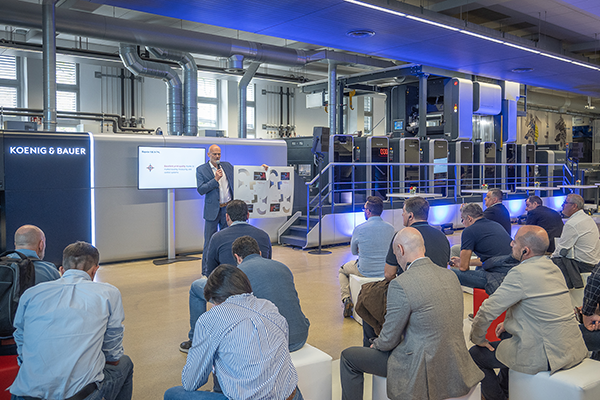
This explanation lies behind investments in digital printing from other established carton converters: it is too expensive in lost time to procure very short runs on presses intended to run at up to 18,000 sph. There are caveats. Heidelberg introduced the Primefire 106 for this market at a B1 format and with no limitations on material or format. Versatility and print quality were at the forefront. As a result the machine was too expensive and too slow for what it needed to do. Despite some enthusiastic users, the press was withdrawn.
The Landa Digital Printing S10 has also targeted this market and remains available. Heidelberg has other areas to place its money, Landa has not. Around half the presses Landa had shipped before its financial woes led to a change in ownership were earmarked for carton printing. When the business emerges from reorganisation under new owners it will be no surprise to see an emphasis on carton printing.
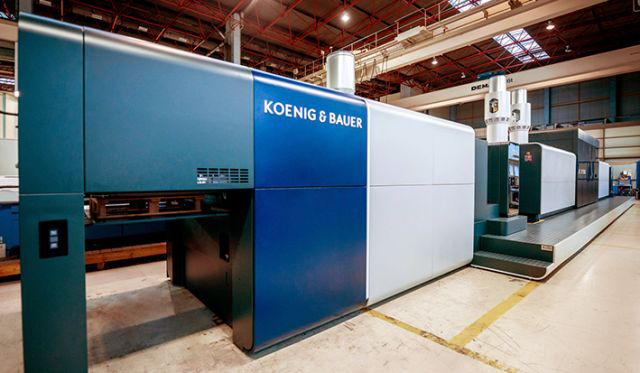
The other option at this level is the Koenig & Bauer Durst Varijet 106. The company has placed two beta presses in Germany and Switzerland and reports that these are running reliably each day while production machines are also in operation in Germany and now in Poland. Analysis of current jobs and the production environment and requirements led to a result for lower costs and energy use, reduced waste, faster set ups and an efficiency gain across the entire factory compared to running with analogue only presses.
Each prospect will have a different result according to its mix of customers, print runs and job types. A perfect job might be a company producing a mix of teas or better still hair colouring dyes. Each month there is a regular order but nobody knows how many cartons of black, brown, blonde or perhaps pink will be needed. Digital can cope with this far better than litho which also has to take care where different skus are place on the sheet.
The investment required for something of this nature puts the press beyond the reach of all but the larger carton converters. Those stepping into the sector need something at the other end of the cost scale. This could be the Cobalt SP800 the first of what will no doubt become a series of machines combining a flatbed paper path and inkjet array. The design is simple, uses HP thermal inkjets with food safe water based inks and capable of 1200x1200dpi resolution at a price adjacent to £50,000. This is the sort of investment level that might lead on to greater things, but also might flop without major consequences for many businesses.
“We are definitely getting litho printers looking at single-pass printers and cutters,” says IGS managing director Peter Flynn. “They are also looking at label cutting to go with an investment in a Konica Minolta 230 for example. It’s about diversifying away from commercial litho printing for not much money in the search for margins because they are not making money simply printing commercial litho jobs. It’s about finding new revenue streams by branching into short run packaging.” The first Cobalt machine went to Bluetree as part of a shift into stickers and labels which has also included an HP Indigo 6K label press. It has been supplying branded bags for the hospitality sector. Others have been sold to a wholesale company that is supplying the hospitality industry with food and ingredients to enable it to offer restaurants printed takeaway cartons bespoke to each outlet.
These are probably beyond the scope of many commercial printers. There is another key opportunity according to Flynn where commercial printers can play.
This is the start up B2C business making products that need boxes that because of its size is of no interest to large carton printers but is within the scope of a diversification minded commercial printer. They might be a coffee company, a tea blender, smoke house or indeed a candle maker.
This is not the only audience that IGS is looking to sell to. There is opportunity for mainstream carton converters where the Cobalt can deliver proof of concept and early stage designs and later in the process, can deliver production ready proofs for sign off, all without interfering with production schedules that have time tabled production across a fleet of B1 and larger sheet fed presses.
There is also an opportunity in what might be called smart production. Flynn cites the example of a company producing energy bars with a multitude of different flavours that need to be packed in a shelf ready display box in different combinations of those flavours. And that box can be supplied to a gym with its own branding and logo. “Each box can have 14 bars and sorting it becomes quite an issue,” he says. “The solution was to have ten Cobalts lined up producing the packaging in sort sequence.”
Branded packaging for events is a natural for digital printing, whether the label for a drinks bottle or the box for a 1,000 pizzas needed for a high profile product launch in the fashion industry. The ink that the Cobalt uses has been certified as food safe, so that end of the process is under control. It is also sustainable because of the numbers produced on a material that is inherently recyclable. There is little or no waste.
This sort of solution will become more and more popular as the technology becomes easier to use and no longer requires skilled staff to operate. Simply Inkjet has built machines using Memjet heads for this style of application if the price of the technology is right.
This is where packaging and marketing converge and a point where the experience of commercial printers may trump the deep production experience of the established carton converters. It is clear that regardless of print technology the packaging market is changing; the ground that has supported the development of large, highly efficient and productive print groups, is shifting. It is these changes that provide the opportunities for different printers and other styles of production to enter the market.