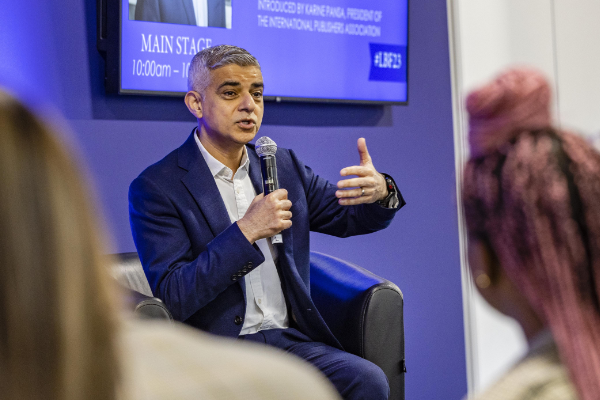
The London Book Fair continued the bounce back for the exhibitions business. After what was agreed to be a lacklustre revival last year, the 2023 show enjoyed a flood of visitors across the entire floor space of Olympia’s two main halls, meeting spaces, gallery areas and it seems almost every nook and cranny that could be found. There was the occasional no-show, and walled off space, but not many.
All the major publishers were present: Penguin Random House, Simon & Schuster, Bloomsbury, Harper Collins and so on. So too were the major UK printers, a few with stands but many prowling the aisles between meetings that had been set up in advance. One of these printers had lined up 30 meetings over the three days. While there was no concept of trying to snaffle big contracts from major publishers, they were willing to listen to propositions about localised printing in support of the work that continues to be placed in Asia and which might be under threat if the political situation in that part of the globe takes a turn for the worse. The last few years of pandemic and paper shortages have taught the publishing industry that supply chains can be vulnerable. Having some local partnerships can be useful on a number of levels, and publishers are far more receptive to this idea now than only a few years ago.
The focus or the three days as ever was on deal making as publishers vied for rights to publish high profile authors, on the networking and this year on sustainability.
The environmental issue had been bubbling away for some years. It has now broken through in a major way with a wider business sustainability framework. Alison Branch, managing director of Park Communications, one of the UK printers with a stand at Olympia, says that sustainability was a key subject for discussion with customers and prospects during the show. This was the first show the London company had attended since acquisition by Graphius, a fit that seems to be progressing well.
The organiser RX (Reed Exhibitions) had adopted recyclable fibre based signage for the show, which was commendable, but fell down on badges with plastic fibre lanyards and more plastic used in the badge holders. A dedicated Sustainability Hub staged seminars that covered a range of ways publishers might reduce impacts. This included a look at the problem of remainders due to over ordering, causing problems around shipping, storage and ultimately disposal.
It also included a seminar staged by the Future Book Forum, an outcome of a conference hosted by Canon in Germany, under the Publishing Accelerator 2030 initiative which has pulled together 19 suppliers, publishers and printers to come up with roadmaps towards the zero carbon goal. Progress on three initiatives were outlined at Olympia.
One has been to measure the carbon impact of a single book according to here it is printed, the paper used and the distances travelled. The data might be applied in the same style of label used on food labels, and whether printers might pay more for a carbon neutral book. A second workgroup has focused on adoption of a decentralised production model for books, such as they might be printed closer to the point of purchase than is currently the case. The technology is in place and the impact will be a massive reduction in waste. Currently as much as 30% of a production run can be pulped after books are shuttled between warehouses, says Jörg Engelstädter who heads the Future Book Forum.
The third work stream is about the financial incentives of reducing waste, warehousing and shipping costs and making the pitch to business end of a publisher, not just the ERG groups, because there are compelling financial reasons to change the business model that publishers have relied on for years. A white paper to outline these initiatives is now planned.

The London Book Fair attracted a good number of visitors after suffering a post pandemic fall off in visitor numbers in 2022.