IST has developed a UV curing technology that operates without photoinitiators and in water based lacquers and coatings. This opens the way to UV curing in flexible packaging, using both flexo and potentially inkjet inks.
The FreeCure technology has been developed in collaboration with BASF. It relies on a powerful dose of UV-C light to eliminate any need for photo initiators, inertisation or electron beams to activate a cross linking process that delivers the benefits of conventional UV curing without the major drawback.
IST has increased the percentage of UV-C generated by its BLK LampCure technology which was developed for highly demanding industrial applications. This delivers a 70% increase in the amount of UV-C energy (up to 280nm) created through a package involving optimisation of the plasma inside the tube, new style reflectors and control units.
IST says that the development parameters stressed no photo initiators, the composition of the binding agent, the functionality of the binding agent, suppression of oxygen inhibition and the surface drying characteristics. This means no or minimal VOCs.
In an aqueous varnish the rapid drying of the surface prevents excessive oxygen inhibition which enables formation of double bond conversions with the need for photo initiators.
This opens the way to printed packaging within the GMP guidelines for food safe packaging where direct contact is possible. Photoinitiators are a beta noire for even indirect food packaging.
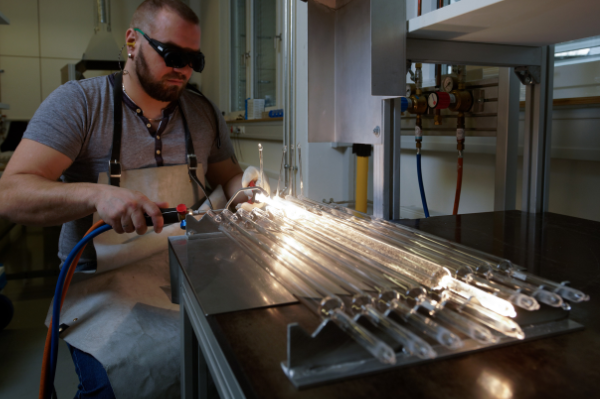
IST believes that a single high powered lamp system will be sufficient for deliver the energy for a complete cure. The mercury vapour Freecure lamp resides in a simple to install cassette. This also houses the special reflectors designed to reflect on UV energy, allowing infra red energy to pass to the air cooled aluminium housing.
Despite the high power profile of the lamps, IST gives a 2,500 operating hours warranty for the lamps and four times this for the reflectors.
The technology will be a key feature of the company’s Drupa presentation in Hall 1.