
Flexible packaging is already succumbing to digital production technologies, even if only in a small scale.
To date most digitally produced flexible packaging has come from label presses where the limited web width restricts the application. But the supply side of the industry has its eyes on the vast potential for digital production.
Quite simply prepress preparation of gravure cylinders or flexo plates is a slow process and renders short runs impractical. On the other hand the cost of liquid inks is substantially less than the cost of toners or inkjet inks.
But again it will be outside forces that determine the speed and extent of transformation to digital. In short, if marketers and brands demand digital printing, converters will provide it.
They will have a number of options to choose from: the HP Indigo 20000 as the first purpose-designed digital press for flexible packaging and with a 760mm web width; a label press like the Xeikon 3500, currently with a web width at 540mm; other label presses and hybrid machines like that from Uteco which combines conventional printing with a Kodak Prosper inkjet head to administer variable data. The Prosper head is suited to this role as it will print at the same speed as the conventional press, adding variable data for barcodes or messaging in black or a brand colour.
The Italian company ran an Onyx 812 CI flexo press with two Kodak Prosper S20 inkjet heads to demonstrate this at a recent trade show. “Digital technology adds a value never experienced before thanks to Kodak Stream inkjet technology that guarantees print quality and absolute flexibility combined with record speed,” says Uteco.
Much of the investment is coming from label printers who have used digital to print labels, on papers, films and shrink sleeves. Migration to pouches is not difficult, especially where a third company can take on the lamination that is needed to keep inks and the item inside the pack apart.
In conventional flexo the lamination stage can add days to the process as the finished reel needs to rest while solvents disperse. This mitigates against the speed advantage that digital has.
Marcelo Akierman, marketing manager for labels and packaging at HP Indigo Europe, a solution to this problem lies in a joint development with Comexi which uses a water rather than solvent based adhesive. The printed reel is ready in hours.
The Indigo 20000 was introduced as the press for this market at Drupa. The UK first is at Ultimate Digital, the non traditional part of Ultimate Packaging in Grimsby. It started out with a standard Indigo WS6600 label press, always intending to move to the wider machine when it became available.
The press was installed in October last year, leading to several months of testing and adapting to the new possibilities opened up. It uses a different style of toner causing slight colour differences to the label press and needing different colour curves to be in place.
Sales and marketing director Chris Tonge has been marketing the potential for short runs, stressing its ability to address the issues that marketers and brands face in terms of delivery short runs of promotional designs or samples of new products.
CS Labels on a Xeikon is printing pouches for pet food, each featuring the image of a breed of dog that should eat the meal. Such segmentation would not be possible without the short runs that digital enables.
It will take time, but the only way is up. Digital flexo accounts for less than 1% of the market, while well over 10% of labels is printed digitally. “Growth rates in digital will be in three figures a year for several years to come,” says Akierman. “And will then be double digit growth for years after that.”
Even at Pira’s lower estimate of 18% annual growth for digital production of flexible packaging, this is going to be a substantial market.
So far the company has installed around 20 of the Indigo 20000 presses worldwide. This is a fraction of the number of Indigo 10000s , but twice as many as the Indigo 30000 carton press. Many have gone to large groups to gain an understanding of where flexo and digital sit alongside each other. Others are headed for label printers seizing an opportunity to take the flexible packaging printing they are already doing to the next level.
For Ultimate, the press chimes with the times. Average run lengths are falling, marketers want to produce test runs of products to reduce the risk associated with a launch and they want to reduce time to market, areas where digital is supreme. It does not mean that Ultimate is migrating from the process on which it has built its reputation. As well as the HP Indigo press, the company is buying two Fischer & Krieke flexo presses this year.
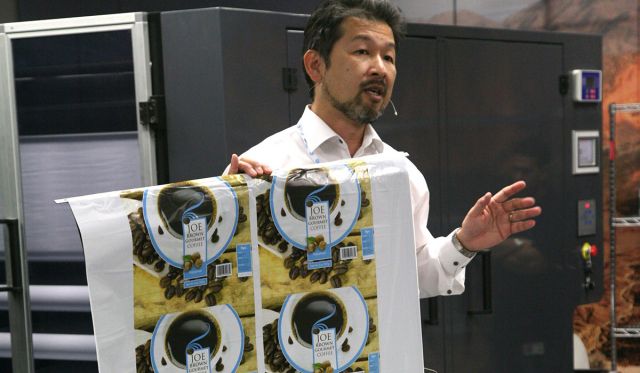
Digital flexo accounts for less than 1% of the market, while well over 10% of labels is printed digitally. “Growth rates in digital will be in three figures a year for several years to come,” says Marcelo Akierman, marketing manager for labels and packaging at HP Indigo Europe. “And will then be double digit growth for years after that.”