
Two universities in Birmingham are joining forces to create a Centre for Printing History and Culture. The initiative between the University of Birmingham and Birmingham City University will be the umbrella for research into the impact of print on the UK’s second city and home to John Baskerville, one of the UK’s greatest type founders. But there are larger ambitions for the project to give it a national relevance.
It will be led by Caroline Archer, professor of typography at Birmingham City, and Dr Malcolm Dick, director for the centre for West Midlands History at the University of Birmingham. The pair have previously collaborated on academic articles. And there are other academics and researchers in the universities with an interest in printing. “We started talking to the school of history where historians considered themselves to be social or industrial historians, but were interested in aspects of print. There were also other people working on various aspects of printing, but had not given themselves that label. It meant that we had a critical mass of people,” says Archer. She had come to Birmingham City University in 2010, carving out a role in the study of print’s history and amassing a collection of typographic specimens and journals.
Birmingham was at the heart of printing in Europe during the 18th century under the influence of Baskerville, who is commemorated with a sculpture in the city centre. Archer and Dick had collaborated on a book about Baskerville and ArcherArcher has also written about the Kynoch Press in the city. “William Caslon also started here and the school of printing had an international reputation, so Birmingham is not an unreasonable place to establish such a centre,” she says. “And Birmingham is easy to get to. But this is not simply about ‘Print in the Midland’, it has to have wider relevance to industry and with links to other individuals and institutions.”
The Centre will combine the library that Birmingham City University has gathered and continues to build with printing presses from the University of Birmingham. “they found some old presses in a basement that had been used to teach bibliography and as that is no longer on the syllabus, the presses were no longer needed.” Other material is being donated. “We are conscious that there’s a lot of material lurking around, and people can have the problem of knowing what to do with it.”
It will need to attract the interest of the industry, attracting those people who are capable of running the old equipment and teaching a new generation in the skills of printing. There is increasing interest in the craft aspects of printing and from people wishing to learn about these skills. There are frequent inquiries about people wanting to learn how to run a table top Adana for example. There will be workshops to cater for this. “Printing presses like to be used,” says Archer, “not just looked at.” These will be housed at Winterbourne House, appropriately an Arts & Crafts style building belonging to the University of Birmingham. It also has the resources of the Cadbury Research Library.
Projects that the centre will research include the influence of Beatrice Warde using material in the archives of the University of Birmingham that have never been used previously. It will also examine Printing and the Mind of the Midlands; Industrial Publishing; and John Baskerville. There will be a programme of exhibitions, launching with a kick off show at Birmingham City University’s Parkside gallery until 12 February.
Dick adds: “We are linking academic research and teaching with the activities of museums, libraries, businesses and individuals who are interested in print history and culture in Britain and beyond.
“The rare books and archives in the Cadbury Research Library and the printing press in Winterbourne House at the University of Birmingham are superb local resources. The CPHC is a major enterprise for both universities and the people of Birmingham.”
The UK lacks a national print museum and while there are smaller museums with working examples of composing machinery or presses spread across smaller museums or as part of the Science Museum, there is no central hub. Currently the St Bride Foundation library is closed for an indefinite time and The Type Archive in Stockwell has yet to open to the public. Archer is keeping an eye on developments. Just in case.
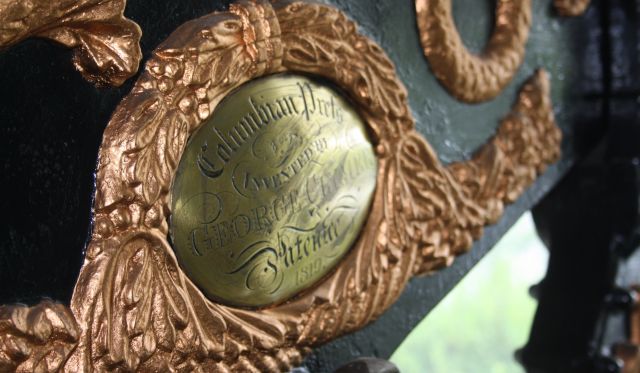
Birmingham is to gain a Centre for Printing History and Culture, which will reflect the role that the city played at the heart of European printing during the 18th century and the second most important city for the industry at the time outside London.