
Even without emotive images of wildlife displaced by forestry activities, the paper industry would be in the firing line of climate change campaigners because of the energy needed to convert a tree into paper. Then there is consumption of water and emissions and waste that are generated.
A few years ago there was also the issue of how pulp is bleached, and campaigns against the use of chlorine as a bleaching agent. It is no longer used, nor do papers need to declare themselves ECF or TCF. But paper remains in the firing line even with campaigns by Two Sides to point out that European forest cover has never been greater and that this is growing at a rate of 1.5 million football pitches a year.
The target, however, has moved. In the last decade paper production has cleaned up its act in every sense. Volumes of waste created are heading downwards, through there will inevitably be differences between mills and styles of paper; energy use is switching rapidly to renewable sources rather than fossil fuels, emissions are being both reduced and cleaned up. The mills are ensuring that no only is their raw material a sustainable resource, so too are they as businesses.
And it is sustainability in the widest sense of the word: involving social as well as ecological impacts, people as well as financial. Sappi sums this up as the three Ps approach: Prosperity, People, Planet, saying it wants to be a truly sustainable company. Chief executive Steve Binnie outlines this in the company’s combined financial and environmental report: “In order to manage a business sustainably you clearly need to consider a wider range of factors than purely financial, and you also need to consider a broader range of stakeholders, beyond just your shareholders.
“The time interval over which the company’s impacts and contributions should be measured is also much longer than just the current quarter or financial year. Maximising financial and social returns over a prolonged period with the minimum of cost to, or impact on, the environment and people is what we strive for. The similarities lie in that once you extend the time horizon, you usually find that by managing sustainably you are maximising profit.”
It is positioning itself as a forest fibre company, shifting the emphasis from purely paper, as are other paper producers. This is scarcely surprising as European consumption of woodfree coated papers continues to fall and overcapacity remains a problem. Further closures and consolidations are possible, but there are indications that supply and demand are coming back into balance. Lecta, the group of fine paper mills across southern Europe, reckons that capacity this year will be running at 93% thanks to capacity reductions already announced.
“The improvement in supply and demand, with operating rates of above 90% expected over the upcoming years, would represent a turning point for the coated woodfree market, and overall a more favourable scenario for 2015,” the company claims. In other words, printers can anticipate paying more for their paper.
They will be reassured that if paper prices return to prerecession levels, the material they will be buying will be a far better environmental proposition. Emas has been widely adopted across the paper industry allowing detailed examination of performance, mill to mill comparison, and the rate of improvement.
For Sappi this amounts to a 10% reduction in energy use per tonne of paper since 2010, tempered by an increase in extracted water of the same percentage. Carbon emissions have been broadly static. More than 90% of the water extracted from rivers is returned, more often than not cleaner than when it reached the mill. Sappi reckons to return 93% of the water used, a further 2-3% is lost through evaporation while the remainder stays within the paper. This is broadly similar to numbers across European papermaking.
Water quality is one of the measures that is used in consultation with the communities around the mills. With pulp mills there is the smell to eliminate as Lecta is doing in Zaragoza in Spain. Communities can also be concerned about emissions to the atmosphere.
For paper purchasers, mills will provide Paper Profiles which detail the inputs into that particular paper and its impact. After a slow start this European-wide Cepi initiative is gaining wider acceptance.
Part of the reason is that investment in biomass generation has replaced fossil fuel derived energy which placed mills outside Scandinavia at a disadvantage compared to the cleanly sourced energy in the Nordics. Sappi reckons to have achieved 56.8% power self sufficiency for example. This is still below UPM which in its Finnish homeland says that 84% of energy requirements are met through renewables, falling to 67% globally.
Investment in biomass power generation continues across Europe. In integrated mills the boilers can be fired from the black liquor which is a by-product of the pulping process. This is the unwanted parts of what used to be a tree and which retains a calorific value.
Combined heat and power generation units will produce both heat for buildings as well as power to drive the machinery. UPM is installing a unit at a mill in Germany, while elsewhere it is looking to refurbish its hydro power generation.
This has helped reduce use of fossil fuel derived power by 10% over ten years, while at the same time cutting the electricity requirement per tonne by 20% and waste water generation by 25%. The target is to cut CO2 to 20% of 2008 levels by 2020, something that it is on target to achieve.
“Climate is one of the key areas of our sustainability agenda. We have a solid track record in emissions reduction not only in traditional ways but also in new innovations like renewable wood-based biofuels,” Päivi Salpakivi-Salomaa, vice president UPM Environment says.
Like Sappi, UPM is stressing that it is no longer simply a paper company. It has been describing itself as the Biofore company for a few years, to represent projects in biodiesel generation, extraction of chemicals from the renewable resource as well as cellulose of producing textiles and other raw materials.
In terms of wider sustainability issues, its efforts have been recognised at the top. It is a leader in the Dow Jones Sustainability Index, and last year was recognised as a world leader for corporate action on climate change. Closer to the ground it has set up biodiversity projects in the UK where it manages woodlands, in Uruguay where it has a pulp mill and in Finland under the BirdLife scheme. Habits are preserved and breeding encouraged. It is one of 1,200 environmental ideas that was generated according to the company’s sustainability report.
While Sappi, UPM, and others are using virgin pulps, with the exception of UPM’s Shotton Mill which uses recovered fibres, Arjo Wiggins Graphic is a firm believer in the use of recovered fibre.
As well as Paper Profiles, Arjo Wiggins provides a carbon footprint value for each paper, calculated within the guidelines set by the Edinburgh Centre for Carbon Management as a respected outside body.
While it is reducing capacity with the closure later this year of its Wizernes Mill in France, it is adding a deinking and recovered fibre unit to Bessé-sur-Blaye. This will be in operation next year, leaving the ultra white recovered fibre pulp from the Greenfields mill to be sold on the open market.
Arjo Wiggins is also leading in terms of earning ISO 5001, the international standard for energy management which seems destined to be adopted by all large energy users.
Being located in France, Arjo Wiggins does not have access to hydro power as the Scandinavian do. Instead it has increased loading on trucks from 40 tonnes to 44 tonnes, cutting the number of journeys needed into the recycling yards.
Power though is a key focus with implementation of the first ISO 5001 certificates in France indicative of this focus.
Agnès Roger, chief executive of Arjo Wiggins Graphic says: “In 2014 we will build on this work by establishing a plan for reducing power consumption across the whole graphic business rather than site by site. We are following a circular economy approach that allows us to create added value and develop business efficiently.”
Outside day to day production, all the mill groups are engaged in educational and social activities, such as replanting projects. For Arjo Wiggins this means support for SOS Children’s Villages in France, for Sappi this means work with early education of children in South Africa. for Asian Pulp & Paper, it is educational projects in north west China.
As well as the external benefits to those receiving assistance, these activities foster an internal feel good factor. The paper industry wants to be a good corporate citizen.
Arjo Wiggins’ Roger puts it succinctly: “When it comes to environmental and social responsibility every act counts, no matter how small. An industry like ours needs to give itself clear and ambitious targets and implement strategies to achieve them, one step at a time.”
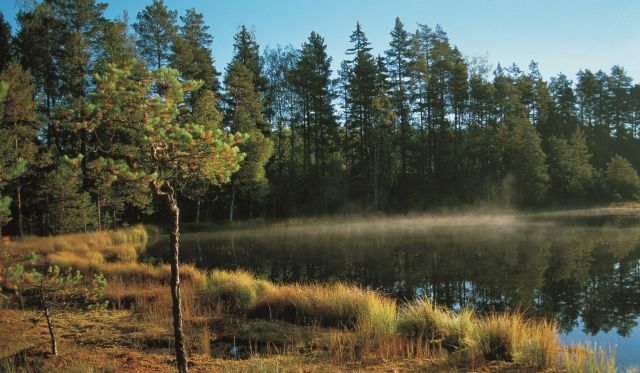
European forest cover has never been greater and is growing at a rate of 1.5 million football pitches a year.
Arjo Wiggins’ Agnès Roger puts it succinctly: “When it comes to environmental and social responsibility every act counts, no matter how small. An industry like ours needs to give itself clear and ambitious targets and implement strategies to achieve them, one step at a time.”