
DataLase has begin a two-year research project with Manchester University’s school of chemistry to identify and develop colour change pigments in a drive towards multi-colour digital printing for packaging and commercial print applications.
DataLase showed a no-contact digital print technology at Drupa 2016 which uses the energy of a tuned laser to effect a colour change in a clear coating applied using conventional print technology. This changed a clear coating to black text or graphics and was part of demonstrations by Ricoh and Xerox.
However, while this can apply a promotional message, tracking code or sell by date, and has led to the acquisition of DataLase by Sato, the real goal will be with the development of multi-colour printing capabilities. For this it needs materials which change colour in a predictable, repeatable way under the energy delivered by laser.
The identification and development of these materials lies at the heart of the project with the university. DataLase explains that this will continue the search for “the best and most diverse portfolio of colour change pigments” which can be applied to product decoration and packaging. The project will explore new synthetic materials as well as existing compounds.
Marion Wrackmeyer, who became a research associate in the school of chemistry at Manchester University, will lead the project over the next two years. Programme manager at DataLase is Adam O’Rourke who says: “This research project will supply us with the expert knowledge and world class facilities needed to further develop our full colour solution.”
The organic materials innovation centre has a track record in working with industry under Knowledge Transfer Partnership arrangements. It has technical expertise in nanocomposite materials and polymers that can be used in smart packaging and in digital printing with high resolution ink deposition.
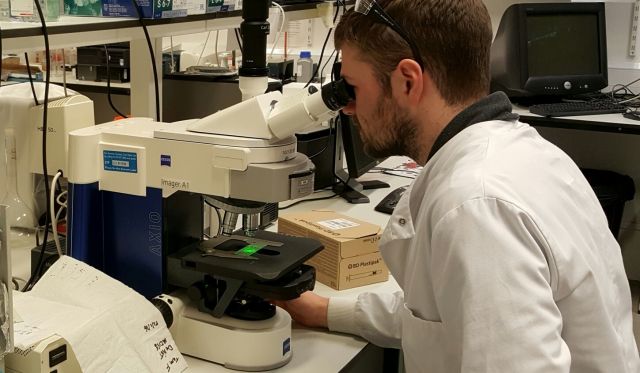
Manchester University will investigate new compounds that can change under laser energy to enable DataLase to offer multi colour printing and opening new applications for printing on products and packaging.