
A unique part of this industry’s heritage is under threat after a deal for a life saving sum fell through after planning permission was refused.
This leaves the Apsley Paper Trail charity facing closure and with it the end of paper making at the Frogmore Mill in Hertfordshire where the world’s first paper machine was installed in 1803.
The Foudrinier process pioneered at the site is still the basis for most paper production around the globe and is still in operation at the mill using Victorian era machines. The paper produced finds outlets in special projects and cane made to bespoke requirements and quantities.
Over the years ownership of the mill has passed through many hands, starting with John Dickinson, the mill’s first operator. It culminated in the sale of the mill site to the charity which has run educational and community activities as well as an information and heritage resource for visitors from the local area and across the world. As a living museum of paper production it receives visits from engineers and students from the industry worldwide.
The Apsley Paper Trail was started by former BPC paper buyer Peter Ingram who saved the mill from closure and converted it to its current status as a working Victorian museum with charitable status. But in recent years, finance has been tight and in order to secure the necessary funds, the trust agreed to sell a parcel of land to the council.
According to the charity, the council agreed to pay 60% of the value immediately and the remainder once planning permission was granted for affordable housing within two years of the deal. Now the council has turned down planning applications claiming concerns over flooding. This has not prevented other developments along the canal say the museum’s supporters.
The council is also stating that it has paid in full and that the issues are completely separate. Any additional payment, should the planning permission have been granted, would count as ‘overage’.
The charity has been seeking an extension to submit acceptable plans and has been forced to make six of its 11 staff redundant. This echoes the problems faced by the St Bride Institute which was also forced into job cuts and restricted hours as funds ran short.
The Apsley Paper Trail is looking for a “prestigious and respected champion” to lend support to the campaign to save it. It is also encouraging local residents to petition councillors to change their stance until a planning application paves the way for release of money which would secure the future and enable it to develop and expand the activities offered, even bringing its second paper machine back into operation.
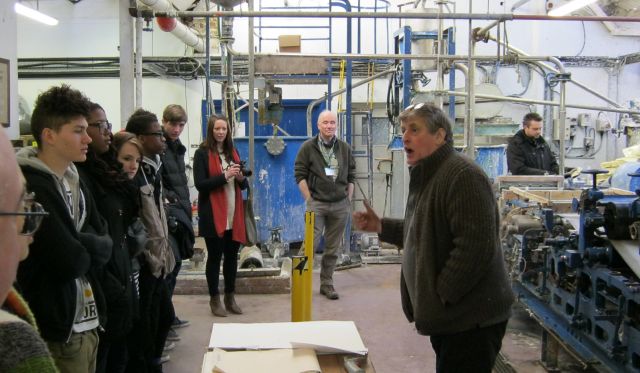
The Frogmore Papermill was the first in the world to have a mechanised paper making machine and the process remains the dominant method of making paper around the world. But now a funding short fall leaves the future of the museum in doubt.