
KBA will complete the biggest restructure for many years as the Fit@All programme comes to an end. The aim has been to bring the cost base inline with prevailing market conditions, especially in publishing markets where in former times KBA was strong in gravure, newspaper printing and commercial web offset. That division has been merged with its growing digital business and accounts for just 11% of sales currently.
The transformation is leading to a greater emphasis on packaging, not only through sheetfed presses, but also through flexo presses and special machines for metal decorating and printing on glass for example. Packaging generates 60% of revenues says CEO Claus Bolza Schünemann in his letter to shareholders with the release of third quarter figures.
The company is in profit, reporting a net profit of €2.4 million on what should be revenue of €1 billion by the end of the year. But the recovery is most in evidence in the rise in order intake. After nine months of the year, new orders are 28.5% higher than in 2014, and higher than VDMA estimates of a 14% increase in printing press orders.
At the three quarter mark, sales have reached €679.7 million with the strong final quarter needed to achieve the €1 billion target. Incoming orders have reached €859.6 million for the year.
“On 1 January 2016 the largest KBA company will have more orders than on 1 January 2015,” the company says. And thanks to the restructure the growth is bringing an increase in profitability. “Sheetfed profits have increased considerably,” he adds.
The restructuring has created a group of separate operations that can no long shelter each other, but must stand on their feet over the long term. The company acknowledges it was slow to respond to the collapse in orders from the publishing sector, waiting for a return to sales which never came.
The company suffered a fall in orders from China, but more than compensated through growth in Japan and North America. European sales also fell compared to last year, but it is the rush of new orders, in double digitals across all divisions, that is most encouraging for the company.
It anticipates that the usually strong final quarter will lead to a growth in profits for the end of year figures. Margins for the sheetfed division were dented by the higher cost of raw materials to cope with the growth in orders.
There is also longer term optimism for its digital operations. The company is set to unveil the 2.8 metre wide inkjet web press that has been developed in collaboration with HP next month and has developed new inks for its own RotaJet to suit industrial print markets such as wall coverings and laminates.
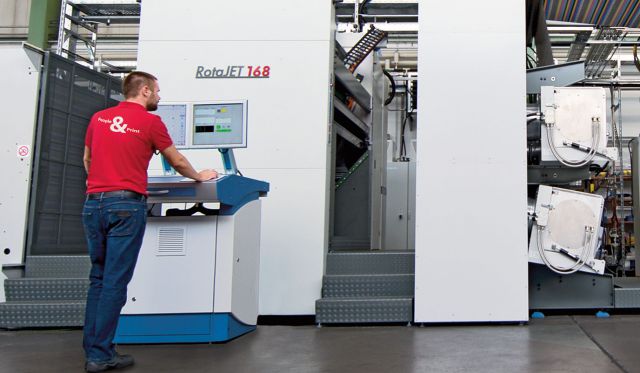
Inkjet is becoming more important to KBA as exposure to declining publishing markets is replaced by digital printing and especially by packaging. The company has been lifted by a surge in orders over the summer, particularly in sheetfed.