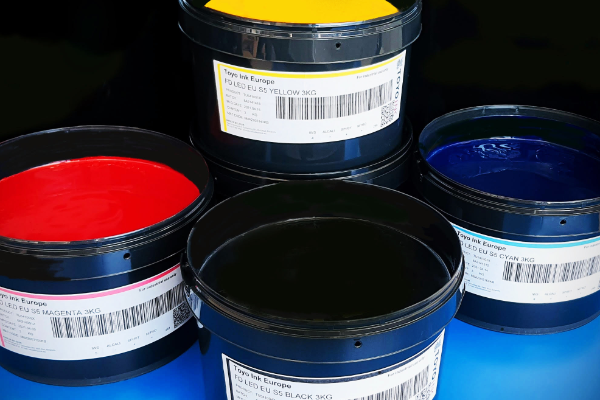
Toyo has regained its clear blue water advantage in LED UV inks with the release of its S5 Flashdry inks for sheetfed offset printing.
The inks comply with all the legislative requirements set by governments and Eupia and are designed for suit printers printing to ISO 2647-2 specifications. The new ink no longer requires hazard labelling for health or environmental warnings and has passed Ingede’s deniability tests with a perfect score.
The ink is being produced at Toyo’s European factory in Belgium where Andrey Andreev, Toyo’s European product manager for low energy products and technology, says: “Toyo Ink Europe has been aggressively pursuing the group’s goal of bringing the most advanced and sustainable systems to the global marketplace by leveraging the group’s expertise in highly reactive raw materials design and formulations for low energy curing .
“The Flash Dry series has already established itself as a trusted and well reputed brand in the industry, and we are delighted to have brought better productivity and performance to this popular low energy curing ink lineup. The new FD LED S5 inks are also deinkable and designed to meet the sustainability needs of today’s commercial printers.”
The ink has already been rolled out to Toyo customers in the UK. Jamie Poyner, managing director of Toyo UK, says: “The 3.1 version of the ink met the requirements of changed legislation preventing the use of certain photo initiators in Europe. And now the S5 established the market differential we have previously had. We have always been technology market leader and everybody else has been playing catch up and had been closing the gap.
“We are incredibly happy with the S5 ink it reestablishes the technology differential we are used to. When that gap closes, the ink becomes more of a commodity and price becomes the differentiating factor, which is exactly what happens with conventional inks.”
Toyo has its own sources of raw materials to combine to optimise the formulations which has been employed in the development of the ink. “LED UV is definitely the future way of printing. There will always be a demand for conventional inks, but that will be for the commoditised part of the commercial print market,” he says.
The drive towards LED is coming now from the packaging sector where the environmental benefits of the low energy technology is paramount compared to the power required for multi-lamp mercury vapour systems for both litho and flexo processes. And these are sectors which, in contrast to commercial print, are expanding. “The diversification of packaging is increasing,” says Poyner. “Even before the pandemic, the majority of sheetfed press installations had LED UV.”